
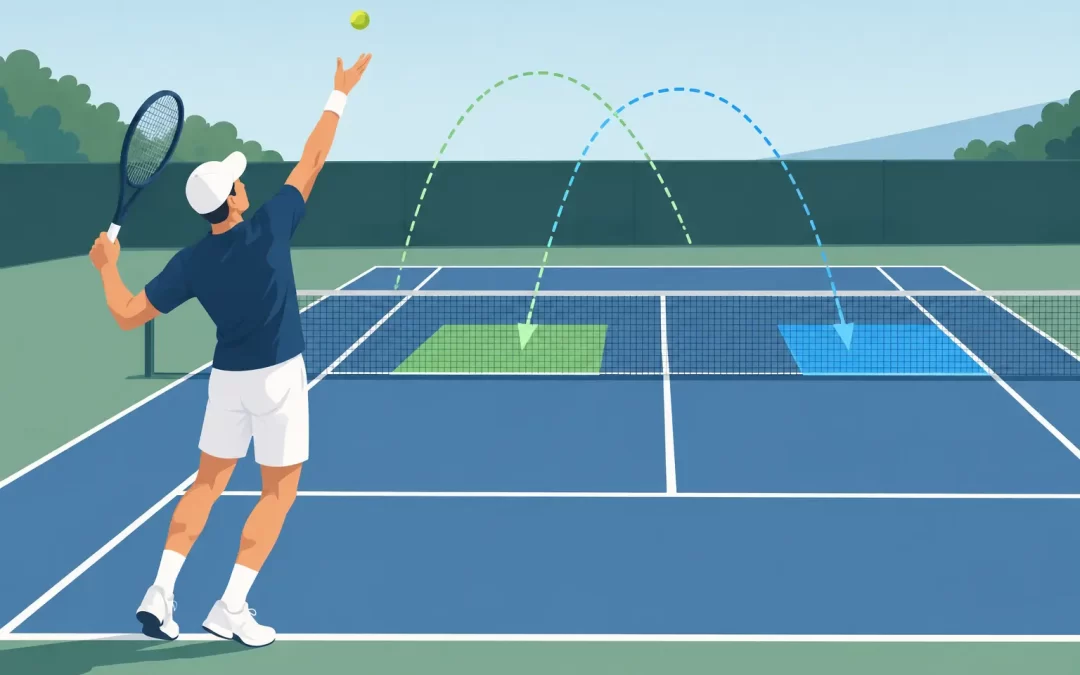
A powerful serve that lands in the same comfortable spot is an invitation for a capable returner. This tennis serve placement guide is about turning your serve into a tactical advantage: moving opponents, protecting your next ball, and making pressure points feel more manageable.
Placement is not about painting lines on every serve. It is about owning a few clear targets, recognizing the returner in front of you, and executing a pattern you have trained. Players who compete stronger do not simply hit serves hard. They make the opponent react first.
Start With Three High-Value Serve Targets
For a right-handed server, the three essential targets are wide, body, and T. The same principles apply for left-handed players, with the angles and opponent’s preferred wing changing accordingly. Each target creates a different return and demands a different response from the server.
A wide serve pulls the returner off the court. From the deuce court, it often opens space for the next ball into the opposite side. From the ad court, it can expose a backhand return or create a short, stretched reply. The trade-off is that a wide target gives you less margin if you aim too close to the sideline, so train it with a realistic target window rather than chasing the paint.
A serve up the T travels through the center of the box and jams the returner’s movement toward the middle. It is usually the highest-percentage directional serve because the net is lower near the center and the target is more forgiving. It also keeps the ball closer to you, which can make your first volley or groundstroke simpler.
The body serve is the most underused weapon at recreational and junior levels. It takes away a clean swing, especially when it attacks the returner’s hip, elbow, or dominant-side shoulder. A body serve does not need extreme pace. A firm serve that forces a cramped contact can produce weak returns, errors, and short balls.
Build Placement From a Repeatable Serve Motion
Trying to steer the ball at the last second is one of the fastest ways to lose rhythm. Reliable placement starts with a stable toss, balanced loading position, and a contact point that matches the serve you intend to hit.
For a flatter T serve, the toss is generally slightly in front and close to your hitting-side line. For a slice serve out wide, allow the toss to sit slightly more to the side, then brush around the ball to create side spin. For a kick or topspin serve, contact is often more over your head, with an upward brushing path that creates clearance and bounce.
These are subtle adjustments, not three completely different service motions. The best servers preserve a similar rhythm and disguise. If your toss moves dramatically every time you choose a target, experienced returners will read the serve before you make contact.
Your first technical priority is not disguise, however. It is contact quality. A player who cannot consistently clear the net with spin and margin has not earned the right to worry about a perfectly hidden target. Build a dependable second serve first, then layer in directional control.
Use Bigger Targets Before Smaller Targets
The service box is not one target. Divide it into practical zones. Aim several feet inside the lines and well beyond the net, particularly while developing a new serve. The objective is to establish a repeatable ball flight that lands in a useful area.
For example, a wide target should initially be a corridor, not the outside inch of the box. Once you can land eight of 10 serves in that corridor with a similar shape, gradually tighten the target. This creates measurable progress instead of a practice session full of low-percentage misses.
Choose the Right Spin for the Job
Flat serves are valuable when you have enough pace and a target that does not require excessive margin. Slice serves are often the best choice for creating angles and pulling returners wide. Kick serves give you height, safety, and a difficult bounce, making them especially valuable under second-serve pressure.
It depends on your level and the court conditions. A fast flat serve can be effective indoors or against a returner standing deep. On a slower outdoor court, a high kick to the backhand may create more trouble than raw speed. Placement becomes more effective when the ball’s spin, height, and trajectory support the tactical goal.
Tennis Serve Placement Guide for Match Patterns
A target without a next-ball plan is incomplete strategy. Before you serve, know what type of return you are trying to create and where you want to play your next shot.
From the deuce court, a wide serve can open the court for a forehand into the opposite corner. A T serve may draw a more central return, allowing you to take control with your strongest groundstroke. A body serve can create a shorter ball that you attack through the middle, reducing the angles available to your opponent.
From the ad court, the T serve often challenges a right-handed opponent’s backhand. A wide slice can stretch that same player toward their forehand side and expose the open court. Do not assume one pattern will work forever. If the returner starts leaning, change the target or use the same target with a different speed and spin.
On important points, players often become predictable. They serve harder, aim closer to lines, and abandon the patterns that got them there. Instead, choose the serve you can execute under pressure. For many players, that is a well-shaped second serve to the body or backhand, followed by a disciplined first groundstroke.
Read the Returner Before You Serve
Serve placement should respond to what you see. Watch where the returner stands, which side they protect, whether they take the ball early, and how they react when jammed. A returner standing far behind the baseline may be vulnerable to a short slice or body serve that arrives before they can create space. A returner crowding the baseline may struggle with a high kick serve.
Also pay attention to handedness. Against a left-handed opponent, the familiar ad-court wide slice that attacks a right-hander’s backhand may instead feed their forehand. That does not make the serve wrong, but it changes the pattern you should expect next.
Between points, use a simple decision process: identify the score, assess the returner’s position, choose one target, and commit. Avoid debating three options while you are at the line. Clear decisions produce freer acceleration.
Practice Placement With Accountability
Serving baskets without a scoring system can feel productive while teaching very little. Give every session a target, a standard, and feedback. Video review is especially useful because it reveals whether missed placement comes from the toss, contact point, balance, or an attempt to guide the ball.
Use this four-part placement block once or twice each week:
- Hit 10 first serves to each major target from both courts, recording how many land in your target corridor.
- Hit 10 second serves to the body and backhand targets, with spin and net clearance as the priority.
- Play service points beginning with a called target and required next-ball pattern.
- Finish with a pressure set: two serves to a chosen target, and a missed target restarts the score.
Track percentages over several weeks. A useful first target might be 60 to 70 percent into a broad zone. Competitive players can then raise the standard by narrowing the zone, adding a required spin, or demanding a specific next-ball outcome.
At Point of Mind Coaching, serve development is treated as more than a technical correction. It is a structured process that connects mechanics, video feedback, tactical patterns, and the confidence to execute when the score matters.
Do Not Let Placement Make You Passive
There is a difference between serving with control and serving timidly. Placement still requires full intent through the ball. Keep your rhythm, accelerate through contact, and trust the spin pattern you have practiced. When players slow down to guide the serve, they often lose both pace and accuracy.
Your best target is the one you can deliver with conviction, then support with your next shot. Train that decision until it is familiar enough to hold up at 30-all, in a tiebreaker, or late in a third set. That is when serve placement stops being a drill and starts becoming a competitive advantage.