
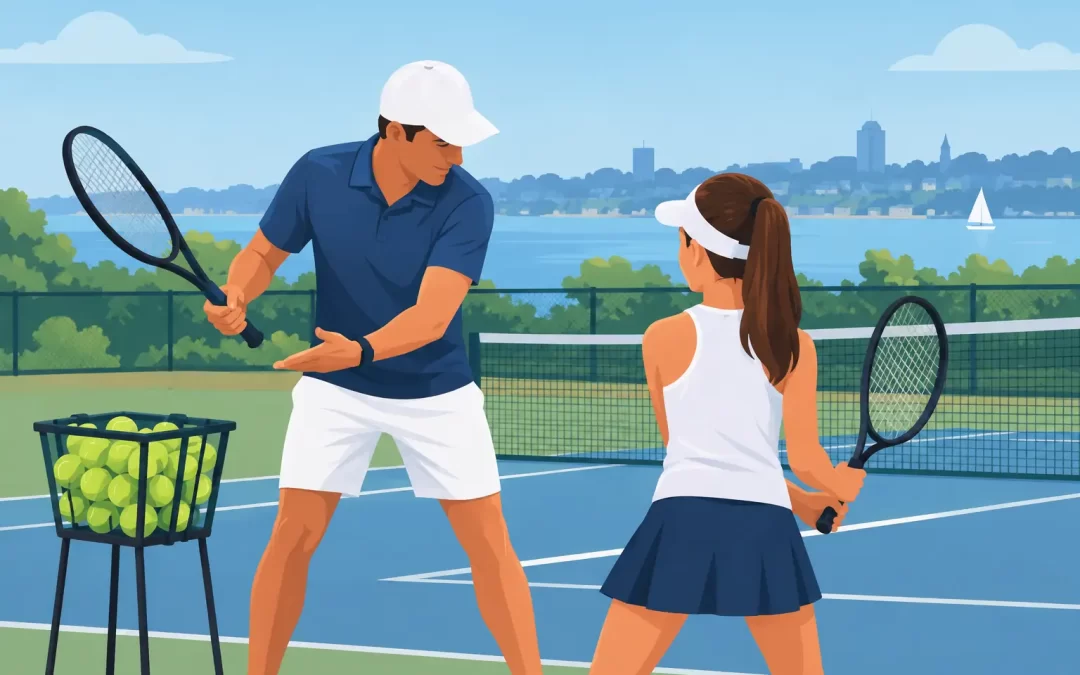
A New Rochelle tennis coach should do more than feed balls, correct a forehand, and send you home. For players who want to improve their results, coaching must create a clear connection between what happens in a lesson, what happens in practice, and what happens at 5-5 in the third set. That requires structure, honest feedback, and a plan built around the player in front of the coach.
Lessons Are Useful. A Development Plan Is Better.
A single lesson can feel productive. You may strike the ball cleaner, make a technical adjustment, or leave with fresh motivation. But isolated lessons rarely produce lasting change. Without a training plan, players often return the following week with the same movement habits, decision-making errors, and uncertainty under pressure.
A serious coaching relationship begins by identifying the real performance gap. For one junior, it may be unreliable serve mechanics. For an adult competitor, it may be a backhand that breaks down when opponents apply pace. Another player may have solid strokes but no repeatable point pattern, no match routine, and no way to recover after mistakes.
The right plan is not identical for every player. Beginners need dependable fundamentals, athletic movement, and simple scoring awareness. Intermediate players need more consistency at higher speeds, better recovery positioning, and clearer tactics. Competitive players need targeted work on patterns, serve and return quality, transition tennis, and mental discipline when the score tightens.
The goal is not to collect drills. The goal is to build skills that transfer to competition.
What a New Rochelle Tennis Coach Should Evaluate
Before prescribing solutions, a coach should observe how a player performs, not just how they look when the ball is fed comfortably. Clean technique matters, but tennis is an open-skill sport. Players must judge a moving ball, manage time, recover their position, select a target, and execute under changing conditions.
A meaningful assessment looks at technical execution, movement, tactical awareness, and mindset together. A player who misses wide may have a swing-path issue, but the root cause could also be late preparation, poor spacing, an unrealistic target, or tension caused by trying to hit a winner from a defensive position.
Technical Fundamentals
Technique gives a player access to control, spin, pace, and reliability. A coach should be able to explain what needs to change and, just as importantly, why it matters. Vague advice such as “watch the ball” or “move your feet” is not enough by itself.
Useful instruction is specific. It may focus on earlier unit turns, a more stable contact point, a better loading pattern on the serve, or a recovery step that prepares the next ball. The player should leave knowing one or two priorities to rehearse, rather than trying to overhaul every stroke at once.
Movement and Court Position
Many players believe they need better strokes when they actually need better feet. Late arrivals lead to off-balance contact. Poor recovery creates rushed shots. Standing too close to the baseline or retreating without purpose can make an opponent’s ordinary ball feel difficult.
Effective coaching develops split-step timing, first-step quickness, balance through contact, recovery habits, and the ability to recognize when to defend, rally, attack, or move forward. These details make technique more reliable because the player arrives in a better position to use it.
Tactical Decision-Making
Players do not win points by hitting attractive shots. They win by making higher-percentage decisions repeatedly. That means understanding margins, recognizing court position, using the right target, and building points around personal strengths.
A player with a dependable crosscourt forehand should know how to use that ball to create a shorter reply. A player with an effective serve should understand the next shot, not simply hope for an ace. Strong coaching turns these ideas into practical patterns that can be repeated in matches.
Competitive Mindset
Confidence is not pretending that pressure does not exist. It is having a process when pressure arrives. Players need routines between points, responses to errors, clear intentions before serving or returning, and the discipline to keep competing when momentum changes.
This is especially valuable for juniors who are learning to manage expectations and for adult players who become frustrated when a match does not follow the script. Mental training should be connected to on-court behaviors: breathing, body language, shot selection, preparation, and recovery after a mistake.
Feedback Between Sessions Changes the Pace of Improvement
The limitation of lesson-only coaching is simple: most tennis happens outside the lesson. A player may receive a correction on Tuesday, practice it incorrectly on Wednesday, then repeat the same pattern for days before the next session.
Hybrid coaching closes that gap. Video review can show a player what they are actually doing, which is often different from what they feel. Weekly practice plans create purpose for independent training. Direct coach communication gives the player a way to ask questions before a small issue becomes a permanent habit.
This approach does not mean every player needs constant analysis. A beginner may need short, uncomplicated assignments and one technical focus. A tournament player may benefit from match video, scouting notes, and more detailed tactical review. The level of support should match the player’s goals, schedule, and readiness to train.
At Point of Mind Coaching, the model combines in-person instruction with online support so players can carry coaching into practice and competition. Led by Harold Toussaint, a USPTA Elite Professional and former nationally ranked player, the focus extends beyond stroke production to the habits that help players compete stronger.
How Parents Can Judge a Coaching Fit
Parents of developing juniors should look beyond whether their child enjoys the lesson. Enjoyment matters, especially early on, but development also requires accountability, progression, and communication.
Ask how the coach measures improvement. There should be a clear answer beyond “they are getting better.” Progress may show up in more reliable rally tolerance, improved serve percentages, stronger movement patterns, better match choices, or greater emotional control after errors.
Also ask what the player should do between sessions. A coach who assigns no practice focus may provide a pleasant experience, but may not be building an independent competitor. On the other hand, the plan must be realistic. Overloading a young player with technical instructions or demanding a schedule the family cannot sustain creates stress, not progress.
The best environment is demanding without being demeaning. Players should be challenged, corrected, and held to standards while still feeling safe enough to ask questions and make mistakes. Long-term confidence grows when a player learns that errors are information, not evidence that they do not belong on the court.
What Committed Adult Players Need From Coaching
Adults often have limited practice time, which makes precision especially valuable. An adult player preparing for league matches does not necessarily need the same training volume as a high-performance junior. They do need a plan that identifies the few changes most likely to improve match results.
For some, that means building a serve that starts points more effectively. For others, it means learning to stop donating errors from neutral positions, improve return placement, or recognize when a low-percentage down-the-line shot is costing them games.
A coach should respect the adult player’s goals while still being direct. If the goal is to win more matches, sessions must eventually include scoring, pressure drills, return games, and tactical problem-solving. Technique work is essential, but it must serve the player’s actual competitive needs.
Choose Coaching That Produces Ownership
The strongest sign of quality coaching is not dependence on the coach. It is player ownership. Over time, a player should understand their patterns, recognize their common breakdowns, know how to practice with intention, and have a reliable response when a match becomes uncomfortable.
Whether you are a parent seeking a structured path for a junior or a committed adult ready to compete with more confidence, choose a coach who can explain the process, set standards, and adjust the plan as you improve. The next lesson matters, but the habits you build between lessons are where your game begins to change.