
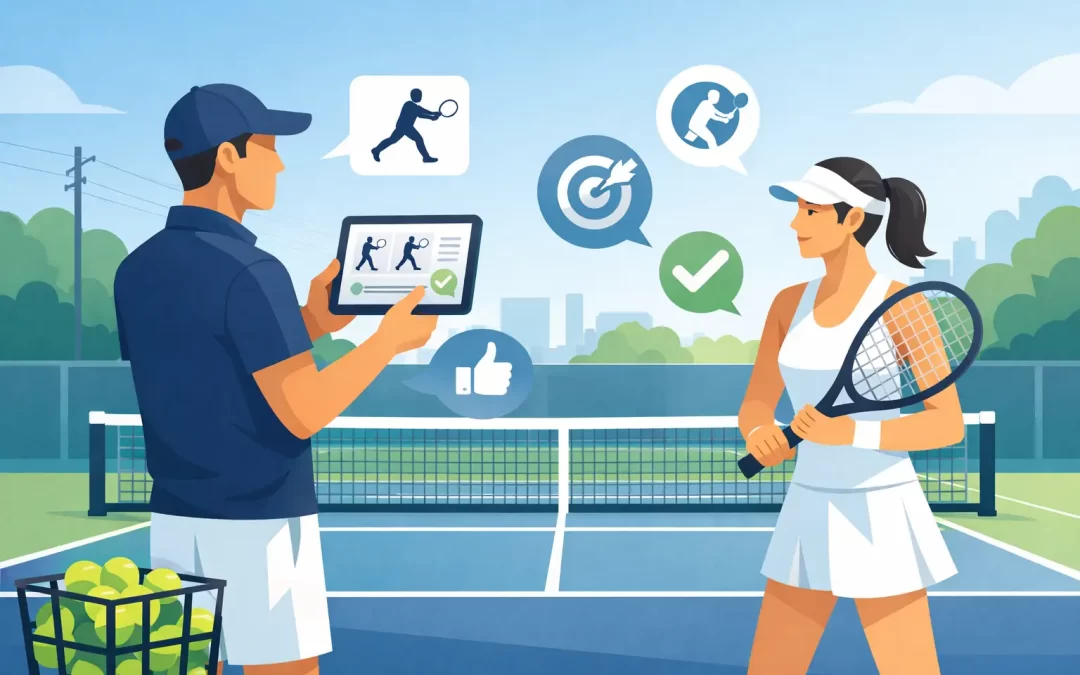
You can hit for months, even take lessons regularly, and still feel like your game looks different in matches than it does in practice. That gap usually comes down to one thing: not enough useful feedback. Private tennis lessons with feedback change that by giving players more than court time. They create a system for correction, reinforcement, and better decisions under pressure.
That matters whether you are a junior trying to build a competitive foundation, an adult player tired of repeating the same errors, or a parent looking for a more serious development path. Improvement in tennis is rarely about working harder alone. It comes from knowing what to change, how to train it, and what to pay attention to between lessons.
Why private tennis lessons with feedback matter
A standard private lesson can help, but its impact depends on what happens after the hour ends. If a player leaves with vague advice like “move your feet” or “finish higher,” the lesson often fades by the next session. The player remembers the general idea, but not the exact correction, the reason behind it, or how to apply it under match stress.
Private tennis lessons with feedback are different because they extend coaching beyond live instruction. The player gets specific input on technique, movement, shot selection, and habits. More importantly, that input is organized. Instead of collecting random tips, the player works on a clear set of priorities.
This is where faster progress happens. Feedback shortens the time between mistake and adjustment. It also prevents a common problem in tennis development: practicing the wrong thing for too long.
What real feedback looks like
Good feedback is not constant talking. It is targeted, timely, and tied to performance.
If a player keeps missing crosscourt backhands, the issue might not be the swing itself. It could be spacing, late preparation, poor recovery footwork, or panic under pace. A serious coach does not just point out the miss. He identifies the cause, gives a correction the player can actually use, and then tests whether it holds up in a live rally or point situation.
That distinction matters. Players often mistake information for improvement. Hearing ten technical cues in one lesson can feel productive, but it usually creates confusion. Strong coaching filters the noise. It tells the player what matters most right now.
In practical terms, useful feedback often includes technical correction, movement adjustment, tactical guidance, and mental cues. The best lessons connect all four. A forehand is not just a forehand. It is preparation, balance, intent, target selection, and execution when the score matters.
The difference between correction and development
Some players want quick fixes. Sometimes that is appropriate. If your serve toss is too far behind you, a clear adjustment can clean up a major issue quickly.
But long-term development takes more than correction. It requires structure.
That means each lesson should fit into a bigger process. One week might focus on first-step reactions and contact point discipline. The next might build on that with directional control and rally tolerance. Then the player takes those skills into point play and match scenarios. Feedback becomes more than a reaction to errors. It becomes part of a progression.
This is especially important for juniors and competitive players. They do not just need prettier strokes. They need repeatable patterns, stronger decision-making, and confidence that holds up when matches get tight.
How feedback improves match play
Many players practice in a way that hides their real problems. They look solid in cooperative drills, then fall apart in competition. That usually means their training has not included enough honest feedback around decision-making, pressure, and situational awareness.
A strong private lesson should address more than mechanics. It should ask questions like: Are you choosing the right target? Are you recovering with purpose? Are you defending with margin or forcing low-percentage shots? Are you recognizing when to attack and when to reset?
This is where coaching becomes a competitive advantage. The player learns not only how to hit better shots, but how to build points, manage momentum, and trust a plan. Match improvement often comes less from dramatic technical change and more from better patterns and better choices.
That is also why video review can be so effective when paired with private instruction. Players often feel one thing and do another. Video gives clarity. Feedback then turns that clarity into action.
Who benefits most from private tennis lessons with feedback
Beginners benefit because they avoid building flawed habits early. Intermediate players benefit because they finally understand why they plateaued. Competitive players benefit because small details start deciding matches, and those details need expert attention.
Parents also benefit when coaching includes feedback. Instead of guessing whether a child is improving, they can see a process. There is more accountability, clearer communication, and a better sense of what the player is working on.
That said, not every player needs the same style of feedback. A new player may need simpler cues and repetition. An advanced player may need more tactical detail and performance review. The coaching should match the stage of development.
What to look for in a coach
If you are investing in private lessons, look beyond personality and convenience. A good coach should be able to explain what the player needs, why it matters, and how progress will be measured.
That means sessions should not feel random. There should be a plan. The coach should be able to identify priorities, adjust based on the player’s level, and connect technical work to real match outcomes. Feedback should be clear enough that the player can train with purpose between sessions.
It also helps when coaching includes support outside the lesson itself. That may be video analysis, training notes, weekly goals, or direct communication. Tennis improvement is rarely linear, and players need reinforcement between live sessions if they want consistent gains.
This hybrid model is especially effective for serious players in places like New Rochelle and Westchester, where committed juniors and adults often juggle school, work, fitness, and competition. A lesson alone may not be enough. Ongoing feedback keeps development moving when schedules get tight.
Why unstructured lessons slow progress
One of the biggest mistakes players make is treating each lesson as a standalone event. They show up, work hard for an hour, feel better, and then return to old habits during the week.
Without structure, feedback loses power. The player may know the correction, but not how to rehearse it. Or he may improve one shot while ignoring the decision-making patterns that keep costing points.
This is why serious coaching systems outperform casual instruction. Structure creates accountability. Feedback gives direction. Together, they help players spend more time on work that actually transfers to matches.
A smarter model combines in-person instruction with review, planning, and communication. That does not mean every player needs an intense competitive program. It means every player improves faster when the process is organized.
Point of Mind Coaching is built around that principle. The goal is not to give players more information. The goal is to help them train with clarity, compete with confidence, and build a game that holds up over time.
How to get more from your next lesson
If you want better results from private coaching, arrive with a clear objective. Maybe your serve breaks down under pressure. Maybe your backhand return sits short. Maybe you win rallies in practice but lose them in matches because your shot selection slips.
Tell your coach what is happening, not just what shot feels off. The more specific the problem, the more useful the feedback can be.
Then make sure you leave with one or two priorities, not six. Ask what to focus on during practice, what common mistake to watch for, and how to know if you are improving. That keeps the lesson connected to the rest of your week.
Players who improve fastest are usually not the ones chasing constant change. They are the ones who accept honest feedback, stick to a plan, and train with discipline long enough for the adjustment to become reliable.
If your game feels stuck, the answer may not be more hours on court. It may be better direction. The right feedback does more than correct technique. It teaches you how to practice, how to compete, and how to keep moving forward when progress gets demanding.