
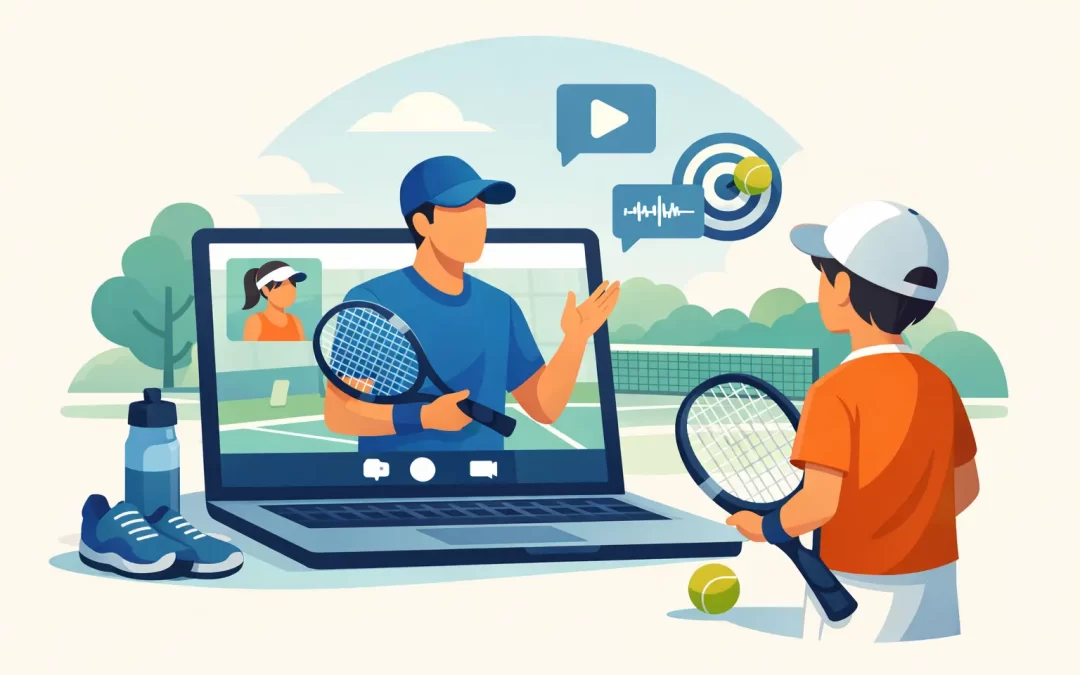
A junior can hit hundreds of balls in a week and still stay stuck. The usual reason is not effort. It is a lack of structure, feedback, and clear priorities. That is where an online tennis coach for juniors can change the pace of development.
For parents, the appeal is obvious. You want more than occasional lessons and vague advice after a match. You want a process that helps your child practice with purpose, correct mistakes before they become habits, and build confidence that actually holds up under pressure. For serious junior players, online coaching can provide that missing layer between in-person sessions.
What an online tennis coach for juniors actually does
A strong online coaching program is not just someone watching a clip and saying, “Looks good” or “bend your knees.” That kind of feedback is too shallow to produce real improvement. Junior development needs context. A player has to understand what to train, why it matters, and how it connects to match performance.
A qualified online tennis coach for juniors typically builds training around a few core areas: stroke development, movement, tactical decisions, match review, and mental habits. The best programs also organize weekly priorities so the player is not trying to fix everything at once.
That structure matters more than most families realize. Juniors often plateau because practice becomes random. One day they work on topspin. The next day they serve baskets. Then they play points without any real training objective. Improvement becomes inconsistent because the process is inconsistent.
Online coaching helps organize the work. Instead of guessing, the player follows a plan. Instead of waiting until the next lesson to hear what went wrong, they get feedback while the issue is still fresh.
Why juniors often improve faster with support between lessons
Traditional lessons still matter. There is no replacing live correction, feeding, movement training, and on-court repetition with a coach. But one or two sessions a week often are not enough by themselves, especially for juniors who want to compete.
That gap between lessons is where many players either grow or drift. If a junior spends five days practicing the wrong pattern, one lesson will not fully solve it. If they are making poor tactical choices in matches and no one reviews those decisions with them, the same losses keep repeating.
Online support creates continuity. A coach can review videos, adjust the weekly plan, and point out specific priorities before bad habits settle in. It also improves accountability. Juniors tend to train better when they know their work will be reviewed.
This is especially useful for families balancing school, tournaments, fitness, and travel. A player may not always be able to add more court time with a coach, but they can still receive direction, video analysis, and strategic input that keeps development moving forward.
The biggest benefits of online tennis coaching for juniors
The first benefit is clarity. Juniors play better when they know exactly what they are working on. A focused plan reduces mental clutter and turns practice into a system rather than a guessing game.
The second is feedback speed. Quick correction matters in tennis. Small technical issues, poor recovery habits, or rushed decision-making can become normal if they go unchecked for too long. Video review gives players a chance to see what is actually happening, not just what they think is happening.
The third is match intelligence. Many juniors lose matches they are physically capable of winning because they do not recognize patterns. They hit the right shot at the wrong time, defend passively when they should counter, or repeat low-percentage choices under pressure. Online coaching can slow the match down and teach them how to think more clearly.
The fourth is confidence built on evidence. Real confidence is not hype. It comes from preparation, repetition, and knowing how to solve problems. When a junior can look at their plan, review their progress, and understand what they are improving, confidence becomes more stable.
When online coaching works best
Online coaching is most effective when the junior is ready to engage with the process. That does not mean they need to be an elite player. It means they need some level of buy-in. The best results usually come when the player and parent both value consistency, communication, and long-term development.
It works especially well for three types of juniors. First, players who are already taking lessons but need more structure between sessions. Second, tournament players who need match review, strategy support, and mental training. Third, families who want expert guidance but cannot always access the right in-person coaching schedule locally.
For players in areas like New Rochelle or throughout Westchester, hybrid development can be particularly effective because it combines live instruction with support that continues after the lesson ends. That model gives juniors more than court time. It gives them direction.
Where online coaching has limits
Online coaching is valuable, but it is not magic. If a player has no access to court time, no willingness to practice, or no interest in feedback, results will be limited. The same is true if the coach only provides generic comments with no progression.
There are also situations where in-person coaching is the priority. A beginner with very raw fundamentals may need more live correction early on. A junior with major footwork problems or significant technical breakdowns may also need hands-on guidance to rebuild correctly.
That is why the best answer is often hybrid, not either-or. Online coaching supports the development process, while in-person training reinforces technique, movement, and live execution. One creates continuity. The other sharpens application.
How parents can tell if a program is serious
Not all online coaching is built the same. Some programs are little more than occasional messages and surface-level tips. A serious junior development program should feel organized, measurable, and connected to match improvement.
Look at how the coach communicates. Are the instructions specific? Is there a clear progression? Do they review actual footage and explain what needs to change? Are they helping the player with tactical awareness and mindset, not just strokes?
Parents should also ask how training is structured over time. Good coaching is not random content. It should identify the player’s current level, set priorities, and adjust as the player improves. If every player gets the same advice, it is not true coaching.
A strong coach also understands junior development beyond technique. Competitive tennis demands emotional control, practice discipline, and better decision-making under stress. If those areas are ignored, development stays incomplete.
What juniors should expect from the process
The most productive juniors do not treat online coaching as passive content. They use it. They send match clips, ask questions, review feedback, and apply one or two priorities at a time. That is how progress compounds.
Players should also expect honesty. A good coach is not there to flatter. They are there to identify gaps, simplify the path forward, and push improvement with discipline. Sometimes that means hearing that the problem is not the forehand at all. It may be poor recovery position, rushed shot selection, or low-intensity movement between points.
That kind of clarity is valuable. It prevents wasted time and helps the player focus on what will actually move their level.
Why this matters for long-term junior development
Junior tennis is full of players who work hard but develop unevenly. They can rally well in practice but struggle in matches. They look technically sound but break down under pressure. They train often but without enough direction to create steady gains.
An online coaching system helps solve that by turning effort into organized development. It creates a training environment where feedback is ongoing, goals are visible, and improvement is tracked through real performance markers.
That is one reason serious families are moving toward a more complete coaching model. They are not just buying lessons. They are investing in a process that helps the player train smarter, compete stronger, and grow with more consistency. Point of Mind Coaching is built around that exact idea – better structure, better feedback, and better decisions over time.
If your junior is motivated but progress feels uneven, the question is not whether they need to work harder. The better question is whether they have the right system guiding the work.