
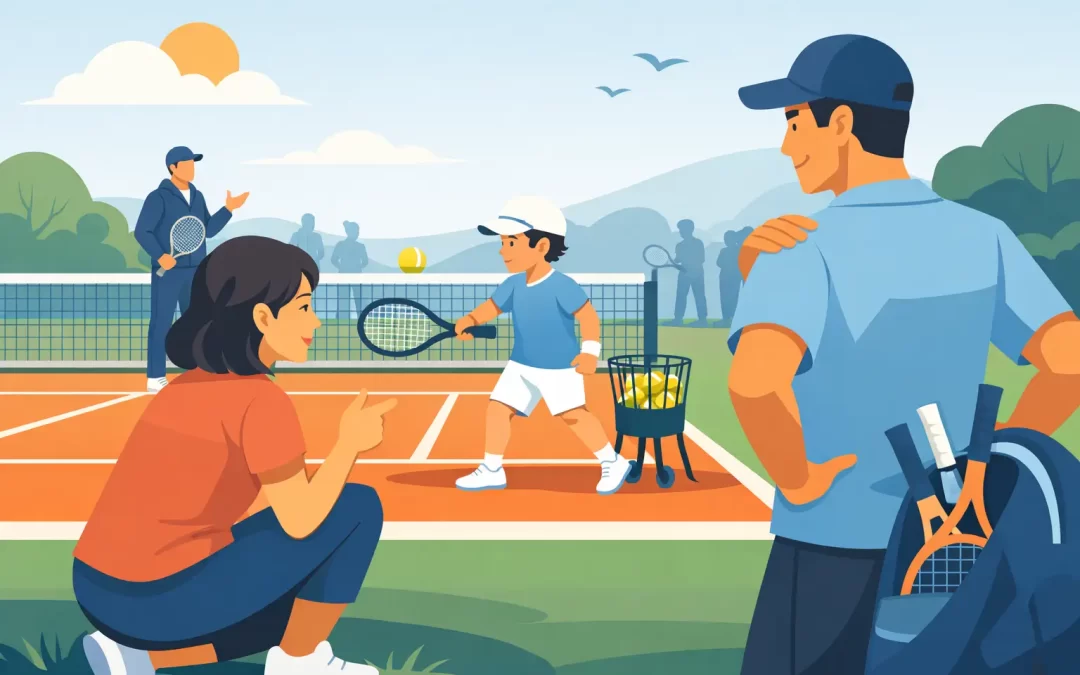
Saturday starts early. One child is hunting for a missing dampener, another is half-asleep in the back seat, and you are trying to figure out whether this tournament actually matters. A good parents guide to junior tennis should make that moment clearer, not more stressful. The goal is not to turn parents into coaches. It is to help you make better decisions about development, competition, and support so your child has a real chance to improve.
Junior tennis can be a great sport for discipline, resilience, and confidence. It can also become expensive, confusing, and emotionally draining when there is no structure behind the training. Talented players do not progress on talent alone. They need a system that connects lessons, practice, match play, physical development, and mindset.
What a parents guide to junior tennis should really teach
Most parents begin with the obvious questions. Does my child need private lessons? How many tournaments should they play? When does this become serious? Those are fair questions, but they are not the first ones to answer.
The first question is whether your child is building habits that lead to improvement. That means showing up consistently, listening to feedback, competing with effort, and learning how to handle frustration. A player who develops those habits can make real progress. A player who only plays matches or only takes random lessons usually plateaus, even with natural ability.
This is where many families lose time. They chase more play, more events, more court time, and assume volume will solve everything. It rarely does. Improvement comes from targeted work, honest feedback, and repetition with purpose.
Start with development, not rankings
Parents often feel pressure to measure progress by wins, rankings, or who made the lineup first. That pressure is understandable, but it can distort smart decision-making. A 12-year-old who wins now by pushing every ball back may not be better developed than the player who is learning to serve aggressively, recover properly, and build points with intent.
Short-term success and long-term development are not always the same thing. Sometimes they overlap. Sometimes they do not. The strongest junior pathways usually focus on building a complete player first – sound technique, efficient movement, tactical awareness, emotional control, and competitive discipline.
If your child is improving in those areas, the results usually follow. If the results come first but the foundation is weak, progress often stalls when the level rises.
The right coach changes the entire experience
A coach should do more than feed balls and correct strokes. Junior players need clear progression. They need to know what they are working on, why it matters, and how it connects to match performance.
That is why structure matters so much. One private lesson a week can help, but only if it is part of a bigger plan. Otherwise, the same issues return between lessons and the player never fully owns the change. The best coaching relationships include technical instruction, guided practice habits, match review, and accountability outside the lesson itself.
For parents, the key is to look beyond personality and convenience. A friendly coach is not automatically the right coach. Ask whether your child is receiving feedback that is specific, measurable, and connected to competition. Ask whether there is a plan for the next three months, not just the next hour.
How much tennis is enough?
This depends on the player’s age, goals, and stage of development. A beginner does not need the same workload as a tournament player. A motivated middle school athlete with competitive goals usually needs more than one lesson a week and occasional matches. They need regular practice, match exposure, and time to develop patterns under pressure.
At the same time, more is not always better. Overscheduling creates burnout, sloppy habits, and mental fatigue. If your child is constantly rushing from school to practice to tournaments without recovery or reflection, training quality drops.
A strong weekly plan usually includes coached training, independent or supervised practice, point play, and some form of physical work. It should also leave room to recover and reset. The exact balance varies, but the principle stays the same – consistent, purposeful training beats chaotic volume.
Tournaments matter, but timing matters more
Competition is essential in junior tennis. It teaches decision-making, resilience, and how skills hold up under pressure. But tournament schedules should support development, not distract from it.
Some players compete too little and stay comfortable in practice mode. Others compete too much and never fix the technical or tactical issues that keep showing up in matches. Both are common mistakes.
A smart tournament schedule gives your child enough match experience to learn, while preserving time to train. If the same match problems keep appearing – second-serve breakdowns, poor shot selection, emotional swings, weak returns – the answer is not always another tournament next weekend. Sometimes the answer is a focused block of training to address the issue first.
Parents guide to junior tennis tournament behavior
Your role on match day matters more than many parents realize. Players are already managing nerves, expectations, and momentum swings. They do not need extra analysis between every game or visible frustration from the sideline.
The best parent presence is calm, steady, and consistent. Support effort, composure, and problem-solving. Avoid coaching from the fence, reacting to every error, or turning the car ride home into a post-match interrogation. If your child wants feedback, keep it simple. Ask what they noticed. Let the coach handle technical corrections and match breakdowns.
This does not mean being passive. It means being disciplined. Junior players perform better when the adults around them create stability instead of pressure.
Mindset is not a bonus skill
Many parents treat mindset as something to address only when a child starts losing confidence. By then, poor habits are often already established. Mental training should be part of development from the beginning.
That includes how a player responds to mistakes, how they reset after a bad game, how they prepare before matches, and how they compete when they are not playing well. Confidence is not built by praise alone. It is built through preparation, repetition, and evidence.
If your child melts down after missed shots, panics in big moments, or checks out when behind, that does not mean they are not competitive. It usually means they need better tools. Breathing routines, between-point habits, tactical clarity, and realistic expectations all help. So does a coaching environment that teaches players how to think, not just how to swing.
Watch for warning signs early
A serious junior pathway should be demanding, but it should not feel chaotic all the time. If your child is constantly confused about what they are working on, dreads every session, or keeps repeating the same mistakes month after month, something in the process needs to change.
The warning signs are not always dramatic. Sometimes it is stagnant footwork, low practice intensity, emotional dependence on winning, or constant lesson-to-lesson inconsistency. Sometimes it is a schedule packed with activity but lacking real progress.
This is where outside perspective matters. A clear training plan, video review, and honest coaching feedback can reveal whether the issue is technique, decision-making, physical preparation, or mindset. Without that clarity, parents often guess – and guessing gets expensive.
Your job is support, not control
Parents have enormous influence in junior tennis, but the strongest support is not micromanagement. It is creating an environment where discipline becomes normal. That means helping your child arrive prepared, respect the process, communicate well with their coach, and stay accountable when results are uneven.
It also means recognizing that development is rarely linear. Players improve, stall, adjust, and improve again. Some months the changes are obvious. Other months the progress shows up in better decisions, stronger habits, or more emotional control before it shows up in wins.
If your child is serious about tennis, they need more than court time. They need structure. They need feedback between lessons. They need coaching that develops the player as a competitor, not just a hitter. For families in Westchester, New Rochelle, and New York who want that kind of pathway, Point of Mind Coaching reflects what modern junior development should look like – organized, demanding, and centered on long-term growth.
The best thing a parent can do is keep the standard high and the message steady: train with purpose, compete with courage, and let progress be earned.