
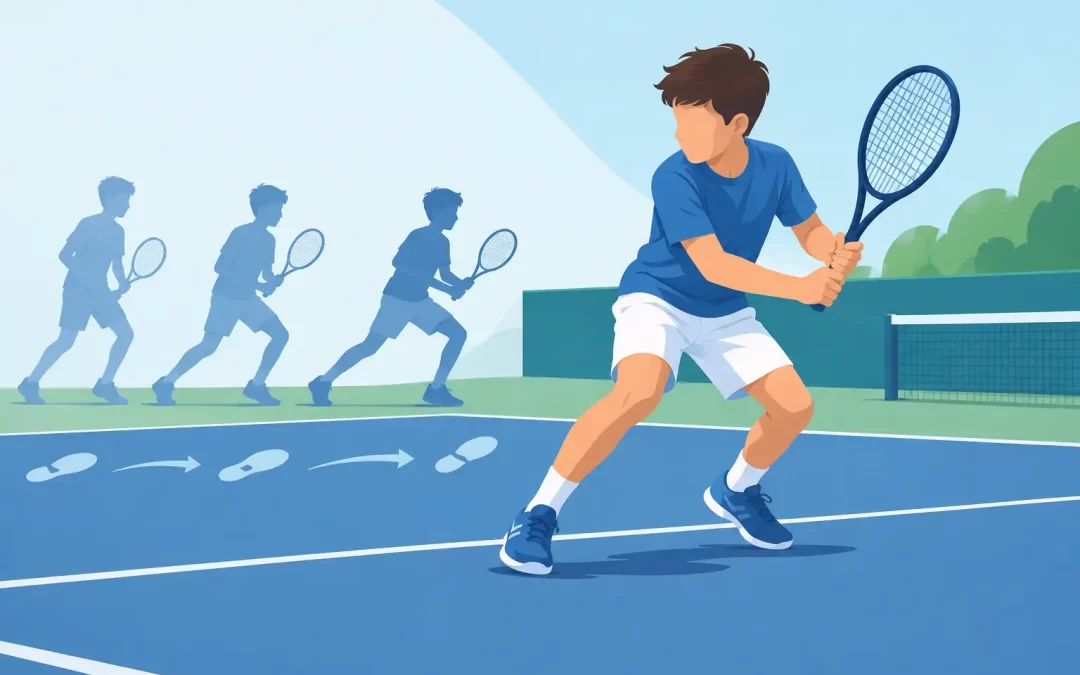
The ball is not always out of reach because a junior is slow. More often, it is out of reach because the first step came late, the recovery step never happened, or the player arrived off balance. A true junior footwork transformation changes those moments. It gives a player more time, cleaner contact, stronger court positioning, and greater confidence when a point gets fast.
For parents and competitive juniors, this matters because footwork is not a separate skill from tennis. Movement determines whether a player can use the strokes they practice. A technically sound forehand will still break down when the player is stretched, leaning backward, or rushing through contact. Better movement turns practice-court technique into match-court performance.
What Junior Footwork Transformation Really Means
Footwork transformation is not simply running more ladders or telling a player to “move your feet.” It is a structured process of improving how a junior reads the ball, starts toward it, adjusts around it, creates balance at contact, and recovers for the next shot.
The best movers often look calm, not frantic. They recognize the direction of the ball early, take an efficient first step, use small adjustment steps near contact, and recover with purpose. Their court coverage looks effortless because their decisions are early and their patterns are trained.
This is why random movement drills have limits. A junior can become quicker through athletic training, but tennis-specific movement requires timing, spacing, and tactical awareness. Players need to know where to recover after a crosscourt ball, when to move forward after a short ball, and how their footwork changes on defense versus attack.
The Five Movement Skills That Change Matches
A complete footwork plan develops five connected skills: split-step timing, first-step reaction, adjustment steps, balance through contact, and recovery. Weakness in any one area can create inconsistency.
The split step prepares the body to move in either direction. It should happen as the opponent makes contact, not after the ball has already crossed the net. A player who splits late is forced to chase. A player who splits on time can push off decisively.
The first step is where many junior points are lost. Young players often take a large, slow crossover step when a quick directional step would get them moving sooner. Training the first response helps juniors reach more balls without feeling rushed.
Adjustment steps are equally important. The first step gets the player close; the smaller steps organize the body around the ball. Without them, juniors swing from uncomfortable distances and blame their stroke for a problem that began with their feet.
Balance at contact lets players control direction, height, and pace. Recovery then determines whether they are ready for the next ball. Competitive tennis is a sequence of movements, not a collection of isolated shots.
Start With Observation, Not More Drills
Before adding conditioning or new movement exercises, identify what is actually breaking down. Video review is especially useful here. A coach can slow down a point and see whether the issue is late recognition, poor split-step timing, inefficient routes, weak deceleration, or a recovery pattern that leaves the court exposed.
For example, a junior who struggles with wide forehands may not need more forehand instruction. The player may be recovering too far toward the middle after each ball, failing to split before the opponent hits, then arriving late and open-stanced without control. The correction has to address the full sequence.
Parents should also look beyond whether a child “moves well” during cooperative drills. Match play reveals the real picture. Does the player stop moving after their shot? Do they get caught flat-footed on return? Do they overrun short balls? Do they recover automatically after changing direction? Those answers create a much better training plan than simply adding more fitness.
Build Footwork Into Every Tennis Session
Dedicated movement work has value, but footwork improves fastest when it is built into technical and tactical training. Juniors need to feel how movement supports a specific shot and decision.
On groundstroke days, players should train the sequence of split, move, adjust, hit, and recover. Start with controlled feeds so the player can recognize the pattern. Then add directional targets, live-ball exchanges, and point situations. The progression matters because a movement habit that works in a drill is only useful when it survives pressure.
On serve and return days, focus on the first two steps. After serving, the player must land balanced and establish a ready position for the return. On return, the split step, initial reaction, and first move toward the ball often determine whether the junior starts the point on offense or defense.
Approach shots and volleys require a different movement profile. A junior cannot move to the net as if they are chasing a baseline ball. They must recognize the short ball early, use controlled steps into the court, and decelerate enough to make the approach with balance. Then they need to continue forward and split before the opponent’s passing shot.
Train Speed Without Losing Tennis Control
Speed and agility training can support a junior footwork transformation, but it should not become the entire program. Ladder patterns may improve coordination. Short sprints can improve acceleration. Strength work can help a player push off, stop safely, and stay stable. None of these automatically teaches a player how to position for a backhand return or recover after a defensive slice.
The strongest approach combines athletic development with on-court application. A player might practice lateral pushes and controlled deceleration off court, then use those qualities in a wide-ball drill that requires recovery to a realistic position. This connection is what turns physical ability into better tennis.
Training volume also depends on age, growth stage, competitive schedule, and current movement quality. A growing junior may need more attention to landing mechanics, mobility, and recovery. An advanced tournament player may need sharper reaction work and repeat-sprint capacity. More work is not always better. Consistent, well-coached work is better.
Use Constraints That Force Better Habits
Players often understand a movement correction when a coach explains it, then abandon it when the rally begins. Constraints can make the right habit necessary instead of optional.
A recovery marker behind the baseline can show whether a player is stopping after contact. A live-ball drill that awards points only after a player recovers can reinforce discipline. Narrow target zones can reward balance and spacing rather than reckless speed. Starting a point with a wide feed can teach the player to defend, recover, and reset before looking for offense.
These drills should not feel like punishment. They should make the player more aware of cause and effect. When juniors see that earlier preparation gives them a more aggressive forehand, footwork stops feeling like extra work and becomes part of their competitive identity.
Make Movement Measurable
The goal is not to turn every session into a stopwatch test. Tennis progress should be measured through quality as well as speed. A player may improve by reaching the ball earlier, reducing unforced errors on the run, recovering into better court position, or maintaining balance deeper into a long rally.
Set specific standards. A junior might track how often they split on time during return games, how many balls they can redirect from a wide defensive position, or how consistently they recover after an approach shot. Video from practice and matches gives the player evidence of progress and exposes habits that are difficult to feel in the moment.
At Point of Mind Coaching, structured feedback is central because players improve faster when they know exactly what to train between sessions. A clear weekly focus prevents footwork from becoming an occasional reminder and turns it into a repeatable performance skill.
The Mental Side of Moving Better
Poor movement is sometimes physical, but it can also be mental. Juniors who fear making errors may hesitate before moving forward. Players who expect to lose a long rally may stop recovering with urgency. Under pressure, they may watch their shot instead of preparing for the next ball.
Confidence in movement comes from repetition and proof. When a player has trained the patterns, reviewed the video, and succeeded in competitive drills, they begin to trust that they can handle a fast ball or an uncomfortable court position. That trust frees them to make smarter tactical choices.
A junior who moves with purpose does not need perfect shots to compete well. They create more playable balls, extend more points, and give themselves another chance to make a good decision. Build that habit one deliberate rep at a time, and the court will start to feel smaller.