
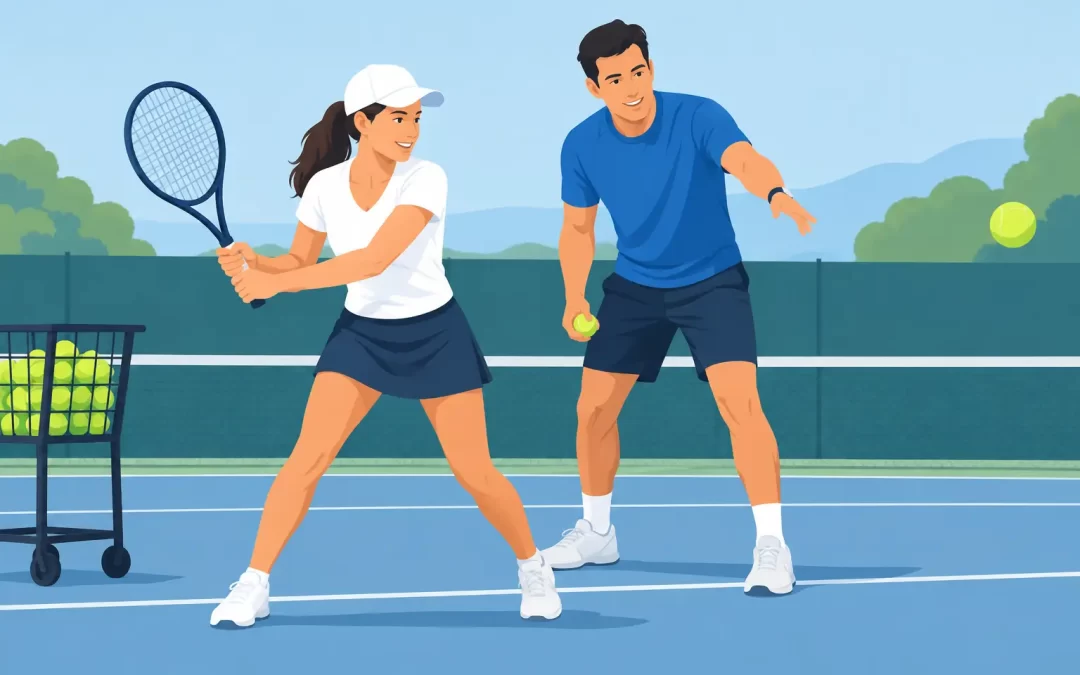
A clean forehand can feel surprisingly achievable in the first lesson. Returning that same ball under pressure, moving to it on time, and choosing the right target is where real development begins. So, can adults learn tennis quickly? Yes, provided “quickly” means building usable skills through a focused system, not chasing perfect strokes or expecting instant match dominance.
Adult players often improve faster than they expect because they can follow instruction, recognize patterns, and commit to purposeful practice. The trade-off is that busy schedules, old movement habits, and fear of making mistakes can slow progress when training lacks structure. The fastest path is not more random court time. It is a plan that connects technique, movement, decision-making, and feedback.
Can Adults Learn Tennis Quickly? Define the Goal First
“Learn tennis” can mean several different things. An adult who wants to rally comfortably with friends may make meaningful progress within four to eight weeks. A player who wants to serve reliably, compete in local leagues, and handle pressure points will need a longer runway. A committed beginner can become match-capable quickly, but competitive consistency is built over months of deliberate work.
Set a standard that can be measured. Instead of saying, “I want a better forehand,” aim to rally 10 balls crosscourt at a controlled pace, make seven of 10 second serves, or recover to a balanced position after every shot. Clear standards keep training honest. They also show you that improvement is happening before the results appear on a scoreboard.
Early progress should be judged by control, not power. Can you start a point? Can you keep the ball in play? Can you recognize when to hit crosscourt instead of forcing a low-percentage shot down the line? These skills make tennis feel playable far sooner than trying to hit winners.
Build Fundamentals That Hold Up Under Pressure
Adults commonly make the mistake of trying to fix every technical detail at once. A more effective approach is to establish a few non-negotiables: athletic ready position, early preparation, balanced contact, and a complete finish. Those foundations apply across nearly every ball you hit.
Start With the Rally Ball
Your first goal is a repeatable rally ball – a shot with enough net clearance, shape, and depth to stay in the court. For most adult beginners, that means learning to use a controlled swing and a comfortable target well inside the lines. The ball does not need to be hit hard to be effective.
A coach can help you identify the one adjustment that will create the biggest improvement. For one player, it may be turning the shoulders earlier. For another, it may be creating more space from the ball rather than crowding contact. Video feedback is especially valuable here because what a player feels and what actually happens are often very different.
Treat the Serve as a Separate Skill
The serve can either accelerate an adult player’s confidence or become a source of frustration. It deserves focused practice, even if your initial objective is simply to begin every point with a reliable serve. Learn a repeatable routine, a consistent toss, and a smooth rhythm before trying to generate pace.
A dependable second serve is one of the most valuable early investments in tennis. It reduces double faults, calms the mind, and lets you compete without feeling that every service game is a crisis. Power can come later, once the motion is stable.
Movement Is What Makes Technique Usable
A player may look solid during hand-fed drills and struggle the moment the ball moves. That is not a failure of talent. It is a reminder that tennis is a movement sport first. Efficient footwork gives you time, and time gives you better decisions.
Adults do not need endless ladder drills to improve. They need to learn how to split step as an opponent hits, use small adjustment steps near the ball, and recover after contact. Practice reaching the ball in balance rather than stretching for it at the last second. A balanced player sees the court more clearly and makes cleaner contact.
Movement training should also respect the individual. An athletic former soccer player may progress quickly with open-stance recovery and court coverage. Someone returning to sports after years away may need to prioritize joint-friendly conditioning, mobility, and controlled change of direction. Fast improvement should never come at the cost of avoidable injury.
Practice Between Lessons With a Clear Purpose
One lesson per week can create progress, but only if the player knows exactly what to reinforce between sessions. Unstructured hitting often causes players to rehearse the same mistakes. A short, focused practice plan creates much more value than a long session spent simply knocking balls around.
A productive week might include one technical session focused on a single cue, one movement and consistency session, and one point-play session. Keep the technical cue simple. For example, “prepare before the bounce” is far more useful than trying to remember six swing thoughts.
After each practice, take two minutes to assess what held up. Did your forehand break down when you were late? Did you avoid using your backhand? Did your serve miss because the toss drifted? This level of reflection turns practice into feedback instead of repetition.
Point of Mind Coaching uses this kind of structured development to connect in-person instruction with ongoing guidance, video review, and weekly priorities. The purpose is not to make training complicated. It is to ensure that each session builds on the last one.
Start Playing Points Earlier Than You Think
Many adults wait until they feel “ready” before playing sets. That can delay an essential part of learning: tactical awareness. You do not need polished strokes to learn how to score, recover, manage risk, and respond after an error.
Begin with modified games. Play points beginning with an underhand feed, use a smaller service box target, or require the first four shots to go crosscourt. Constraints make the game more manageable while teaching smart patterns. They also prevent a common beginner habit: trying to end every point with one hard swing.
As your confidence grows, focus on high-percentage decisions. Hit to larger areas of the court, aim deep through the middle when under pressure, and recover after every shot. The player who makes fewer rushed decisions often wins, even against someone with more impressive strokes.
The Mental Habits That Speed Up Learning
Adults can be their own toughest critics. One missed forehand becomes proof that they are “not athletic” or “too late to learn.” That mindset creates tension, and tension makes timing worse.
Replace judgment with information. A missed ball tells you something about spacing, preparation, target selection, or balance. It is useful data. Between points, use a simple reset: turn away from the error, take one controlled breath, identify the next intention, and move on. This is a competitive skill, not just a motivational exercise.
Learning quickly also requires patience with the awkward stage. New movement patterns may feel unnatural before they become reliable. Players who stay disciplined through that stage improve faster than those who change their technique every time they miss.
What Usually Slows Adult Players Down
The biggest obstacle is rarely age. It is inconsistency. Playing once every few weeks, taking lessons without practice, and changing advice constantly will produce uneven results. A modest but steady schedule is more powerful than occasional bursts of effort.
Trying to copy advanced players can also create problems. Heavy topspin, aggressive open-stance forehands, and high-velocity serves are outcomes of sound fundamentals and physical preparation. Build your game around what you can repeat now, then add complexity when your control earns it.
Finally, do not confuse effort with quality. Hitting 200 balls with poor positioning may reinforce a problem. Hitting 40 intentional balls with a clear target and immediate feedback can move your game forward much faster.
A Smarter Timeline for Adult Progress
In the first month, aim to develop rally tolerance, basic serving rhythm, and court positioning. By months two and three, add directional control, return-of-serve habits, and regular point play. From there, improvement becomes more personal: stronger net play, better doubles positioning, more reliable spin, or tactical patterns built around your best shot.
The pace depends on your starting point, fitness, practice frequency, and quality of coaching. But adults who train two or three times per week with a clear purpose can make visible progress quickly. They begin to move with more confidence, rally with intention, and enter matches with a plan rather than hope.
Give yourself permission to be a beginner, but do not train like one by accident. Show up with a target, seek honest feedback, and build one reliable habit at a time. That is how tennis stops feeling difficult and starts becoming a game you can truly compete in.